
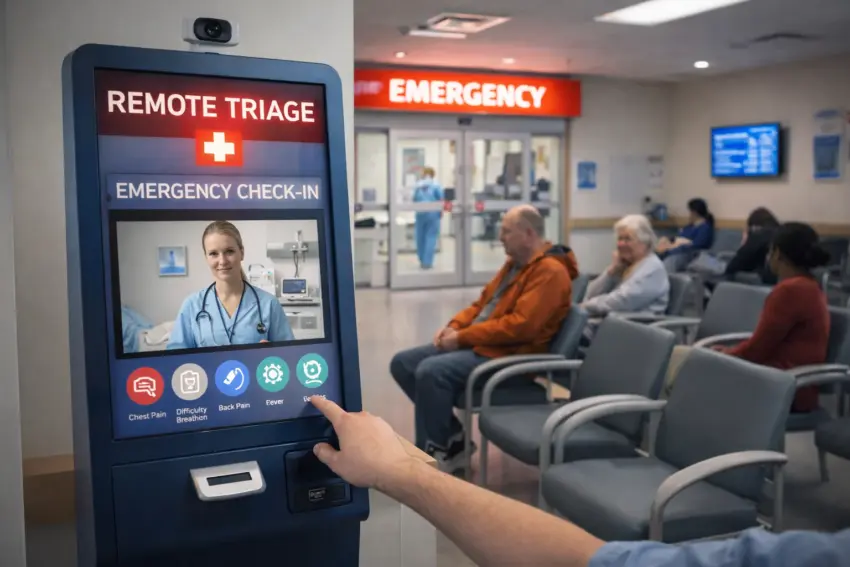
Hospitals are piloting remote triage kiosks in emergency department waiting areas, aiming to speed up initial assessments and reduce bottlenecks during peak hours. The kiosks connect patients to off-site clinicians via secure video, allowing basic triage questions and early risk screening to begin before an in-person nurse or doctor is available.
Health administrators describe the pilot projects as a pragmatic response to overcrowding and staffing shortages. Instead of replacing bedside care, the kiosks are designed to help prioritize cases faster, identify red-flag symptoms earlier, and improve the flow of patients to the right care pathway.
What a remote triage kiosk does
A typical kiosk combines a touch-screen check-in interface with a video link to a trained triage clinician. In some deployments, the station also supports basic measurements using guided devices, either attached to the kiosk or provided by staff. Patients can be asked about symptoms, pain level, medical history, medications, allergies, and risk factors.
- Structured symptom intake using standardized questions to reduce missing information.
- Video-based triage with a clinician who can escalate urgent cases.
- Early safety screening for chest pain, stroke signs, severe breathing issues, bleeding, or sepsis indicators.
- Routing suggestions such as fast-track, urgent assessment, or redirection to appropriate services when suitable.
Hospitals stress that the kiosk is not a final diagnosis tool. It is a front-end intake and prioritization step that can be audited and overridden by on-site staff.
Why emergency departments are testing the concept
Emergency waiting areas often face long queues where many patients arrive at once and staff must balance clinical urgency with limited capacity. Remote kiosks are being tested to reduce “dead time” before first contact, especially when triage desks are overwhelmed.
Hospital managers also see the model as a way to use specialized clinicians more efficiently. A remote team can support multiple sites, cover evenings and weekends, and provide standardized triage support—while local staff focus on hands-on care and high-acuity cases.
What patients may experience
In most pilots, patients check in at reception or are directed to a kiosk by staff. They then have a short video call that gathers symptom details and may assign an initial urgency category. Some systems print a summary for the clinical team or upload it directly into the hospital’s record system.
“The key value is earlier risk recognition—starting the triage process immediately instead of waiting for a single desk to clear.”
Safety, privacy, and clinical responsibility
Because triage decisions can have serious consequences, pilots are built around strict escalation rules. If a patient reports severe symptoms—or if the clinician observes distress on video—the system is expected to trigger immediate in-person assessment. Hospitals also emphasize privacy measures, including sound management, visual screening, and secure connections for the video session.
Another sensitive area is consent and data handling. Patients need to understand what information is collected, who sees it, and how it is stored. Hospitals testing kiosks typically position them as an optional pathway, with staff available for those who cannot or do not want to use digital intake.
Operational challenges in the waiting area
Even a well-designed kiosk can struggle if the environment is chaotic. Common practical issues include ensuring accessibility for older patients and people with disabilities, supporting multiple languages, managing infection control for shared touch surfaces, and preventing the kiosk from becoming another queue point.
- Accessibility (hearing support, readable interfaces, seated use, easy navigation).
- Language coverage for diverse communities and visiting patients.
- Workflow integration so kiosk outputs are trusted, visible, and actionable for on-site staff.
- Fallback handling when video is unavailable or the patient needs immediate hands-on assessment.
What happens next
Hospitals running pilots are expected to evaluate whether kiosks reduce time to first clinical contact, improve detection of urgent cases, and ease pressure on triage desks—without increasing errors or creating inequities for patients who struggle with digital tools. If results are positive, the model could expand into “hybrid front doors” for emergency care, combining remote clinicians, on-site rapid assessment teams, and clearer routing to urgent care and outpatient alternatives.