
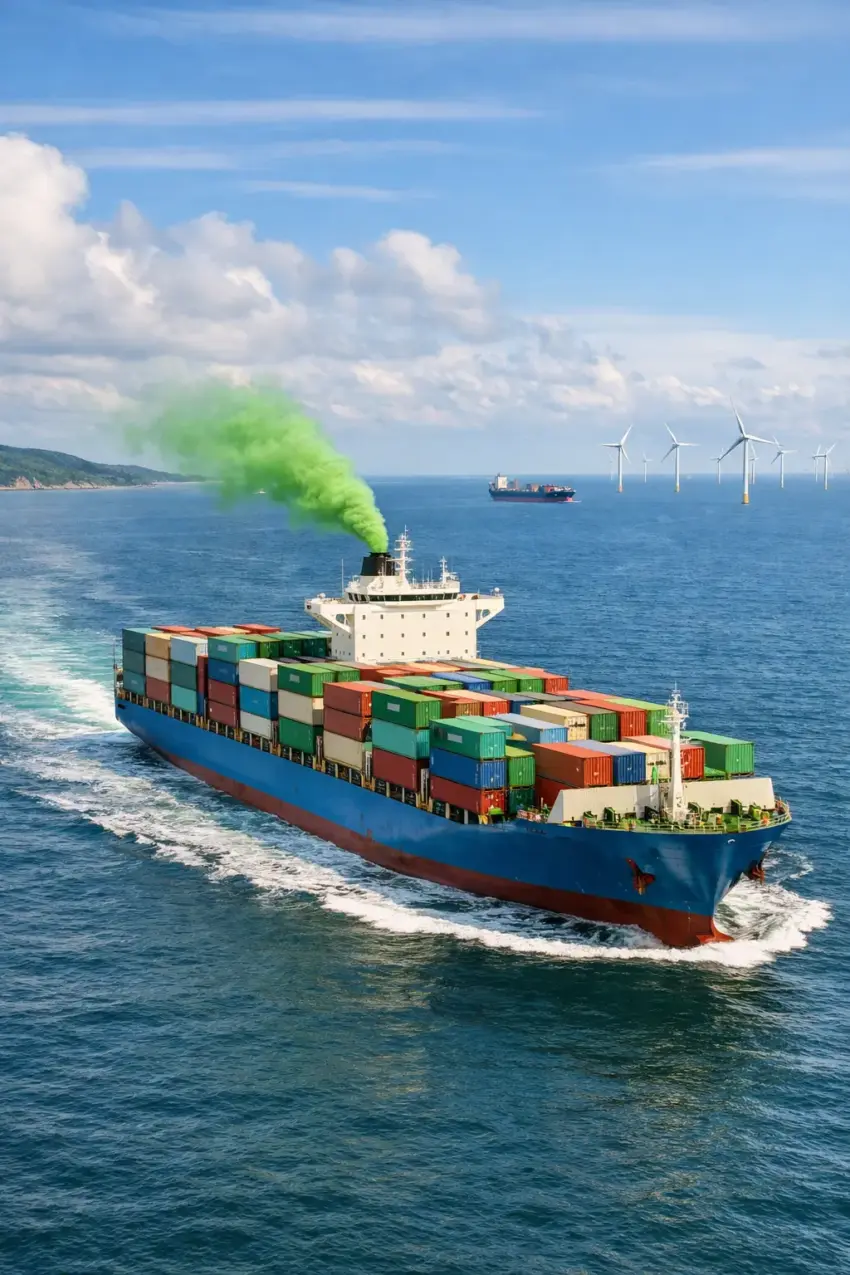
Shipping lines are trialing green fuel blends on short international routes, using pilot voyages to test how alternative fuels perform under real operating conditions. The projects are focused on routes where ships return to the same ports frequently, making it easier to secure fuel supply, monitor engine performance, and document emissions impacts across repeated sailings.
Operators say the trials are a practical step toward decarbonization that avoids waiting for a single “perfect” fuel to dominate. Instead, they are blending lower-carbon fuels with conventional marine fuels to reduce lifecycle emissions while keeping vessels running reliably and meeting safety standards.
What “green fuel blends” usually mean
In shipping pilots, “green” blends typically refer to conventional marine fuels mixed with drop-in or near drop-in alternatives that can be used with limited engine modifications. Common candidates include:
- Biofuel blends such as FAME biodiesel or HVO (hydrotreated vegetable oil), often mixed into marine gasoil or very low sulfur fuel oil.
- Bio-LNG blends where biomethane is used alongside fossil LNG for dual-fuel vessels.
- Synthetic e-fuel blends (where available) produced with renewable electricity, typically limited in volume and costlier.
Because supply is still limited for many alternatives, blends allow shipping lines to start reducing emissions with smaller quantities and to learn how fuel quality and handling affect day-to-day operations.
Why short international routes are ideal for pilots
Short cross-border routes—such as services between neighboring countries or regional feeder connections—are easier to manage for fuel trials. Vessels often sail predictable schedules, refuel in the same ports, and operate under stable weather and duty cycles compared with long-haul ocean voyages.
That predictability helps with what operators say is the hardest part of alternative fuels: logistics. A trial requires consistent delivery, quality control, storage compatibility, and clear documentation to track emissions reductions across multiple voyages.
What shipping lines are testing
Pilot programs are typically designed to answer practical questions that determine whether a blend can be scaled:
- Engine performance: power output, fuel consumption, and stability under load changes.
- Maintenance impacts: injector and filter wear, deposits, and lubrication behavior.
- Fuel handling: storage conditions, compatibility with existing tanks, and cold-weather performance.
- Emissions reporting: measuring CO₂ reductions on a lifecycle basis and tracking other pollutants.
- Operational reliability: whether schedules and port turnaround times remain unaffected.
For some operators, the trials also include crew training modules, since new fuels can require different safety procedures and onboard checks.
Challenges: supply, certification, and cost
Scaling green blends remains difficult. Availability of sustainable biofuels can be constrained, and shipping lines face scrutiny over feedstock sourcing and sustainability certification. Operators also point to cost as a major barrier, especially when fuel price premiums are not matched by freight rates or customer demand for greener transport options.
Another complexity is transparency: emissions reductions depend on how the fuel is produced and verified. Without consistent certification and reporting, similar “biofuel blend” labels can represent very different climate outcomes.
“Blends can reduce emissions now, but only if the fuel supply is truly sustainable and the reporting is credible.”
What happens next
Shipping lines say the next phase is moving from one-off demonstration voyages to repeatable, contracted supply on specific routes—so that blends become a routine operational choice rather than a special project. Industry observers expect growth where ports can guarantee consistent volumes and where cargo owners are willing to pay for verifiable emissions reductions.
If pilot results remain positive, green fuel blends could become a near-term bridge strategy for short routes while the sector builds the infrastructure and supply needed for larger-scale adoption of low- and zero-carbon fuels.