
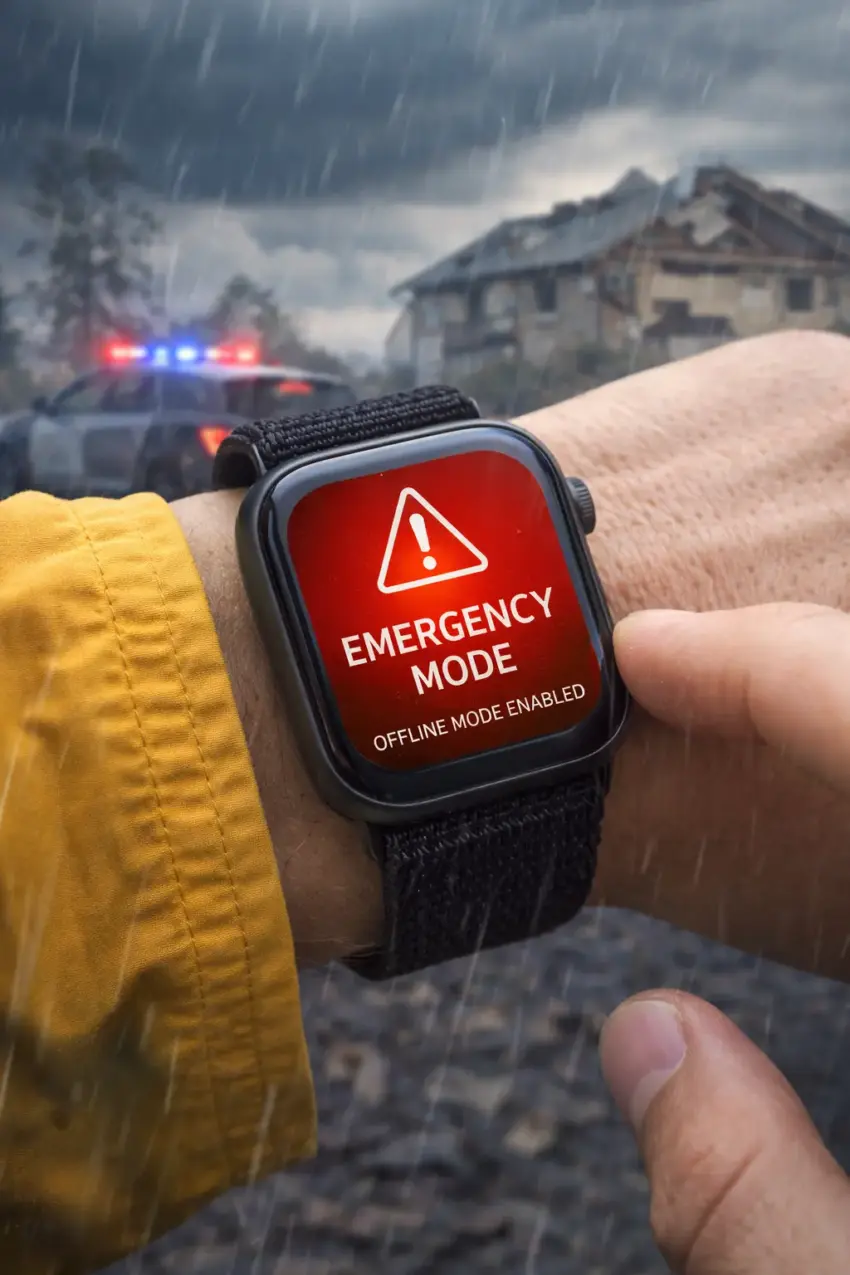
Wearable makers are adding offline emergency modes designed for extreme weather events, aiming to keep core safety features available when mobile networks are overloaded or unavailable. The new modes typically prioritize battery life, simplify on-screen actions, and enable basic alerts or information sharing using whatever connectivity remains—while ensuring the device stays usable for hours or days under stress conditions.
What an offline emergency mode does
Offline emergency modes are built around the assumption that users may lose signal, power access, and normal app functionality. Instead of full smartwatch features, the device switches to a streamlined interface focused on safety-critical tools such as emergency contacts, location snapshots, and local alerts stored on the device.
- Battery preservation by disabling non-essential sensors, animations, and background syncing.
- One-tap emergency actions for SOS calls, alerts, or predefined status messages.
- Offline access to medical ID details and emergency contacts.
- Location snapshots stored locally for later sharing when connectivity returns.
- Basic navigation aids such as an offline compass or cached maps where available.
Why extreme weather is driving the feature
Heatwaves, floods, and storms can disrupt power and communications, while also increasing the need for rapid coordination. Wearables are well-positioned for emergency support because they remain on the user’s body, can trigger alerts quickly, and can provide status updates even when a phone is hard to access. Makers say the goal is to reduce the risk that a smartwatch becomes useless the moment a phone signal drops.
What users in Germany may notice
In Germany, wearable emergency modes are likely to appear alongside existing safety functions such as fall detection, SOS shortcuts, and medical ID screens. Users may see new settings that allow the watch to automatically suggest emergency mode during severe weather alerts, or to activate it manually when traveling in areas with unreliable coverage.
- Emergency mode toggle in quick settings with simplified navigation.
- Offline medical ID display accessible from the lock screen.
- Weather-trigger prompts when extreme conditions are detected or warned.
- Extended battery estimates showing how long the device can run in emergency mode.
Limits: offline does not mean “no network needed”
Even in offline mode, some emergency features still depend on connectivity at some point—especially when sending alerts. If mobile networks are fully down and there is no alternative path, the device may only be able to store information locally until a connection returns. Battery life can also be constrained if users rely heavily on GPS or continuous monitoring.
Privacy and safety considerations
Emergency modes often involve sensitive data: location, medical information, and contact lists. In the EU, manufacturers are expected to minimize data collection and provide clear controls over what is shared and when. Many designs therefore emphasize explicit user activation, time-limited sharing, and visible indicators when emergency information is being transmitted.
What to watch next
Future iterations are expected to improve interoperability—so wearables can share emergency status across devices and platforms—and to integrate better with local alert systems. Some makers may also add mesh-style proximity features that allow basic status sharing between nearby devices when standard networks fail, though such approaches depend on regulatory and technical constraints.
Bottom line
Offline emergency modes for wearables are a response to a simple reality: extreme weather can break the assumptions that everyday devices rely on. By focusing on battery life, quick emergency actions, and locally available safety information, wearable makers aim to provide practical support when users need it most—even if full connectivity is not available.