Universities are publishing new guidelines for the responsible use of student data, aiming to clarify how information from learning platforms, campus systems, and digital services can be collected, analyzed, and shared. The move comes as institutions expand online learning tools and analytics, while students and regulators increasingly scrutinize whether data practices are transparent, proportionate, and necessary for education and support.
What counts as “student data”
Modern universities collect far more than grades and enrollment records. Digital learning environments generate detailed logs that can reveal study habits, attendance patterns, and engagement levels. Guidelines typically map these categories and set rules on what may be used for academic support versus what requires additional justification.
- Academic records such as grades, course registrations, and assessments.
- Learning platform activity including logins, time-on-task, and assignment interactions.
- Identity and access data from campus cards, authentication systems, and Wi-Fi logins.
- Support service data from advising, tutoring, and accommodation requests.
- Optional sensitive data when disclosed for accessibility or special support needs.
Why universities are issuing new rules now
Institutions increasingly use analytics to identify students at risk of dropping out, to tailor academic support, and to improve course design. At the same time, students are raising concerns about surveillance and profiling—especially when data is used to make predictions about performance or behavior. Guidelines are intended to draw boundaries: what is acceptable for student support, what requires consent, and what should not be done at all.
Common principles in the new guidelines
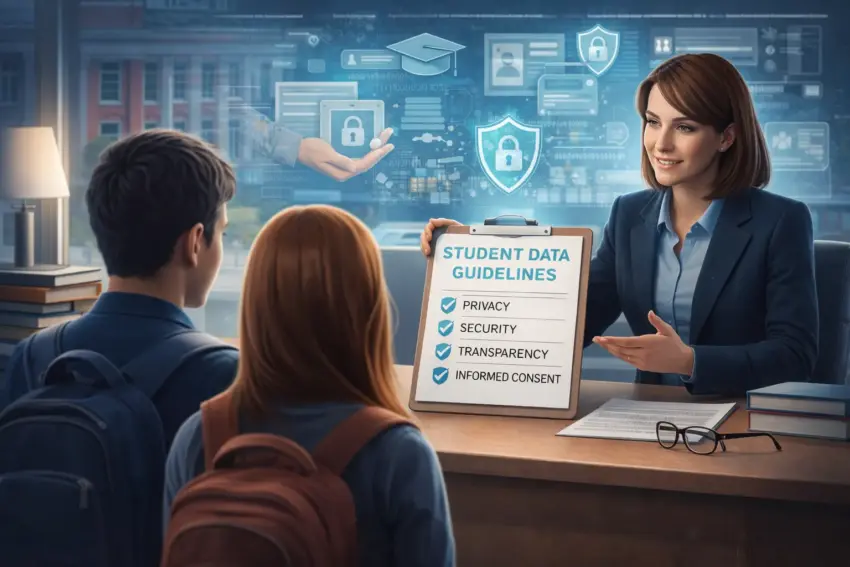
Although policies differ by institution, many guidelines converge on a few core principles: transparency, data minimization, and clear governance. Universities also emphasize that educational analytics should serve student welfare, not punitive monitoring.
- Purpose limitation stating why data is collected and forbidding unrelated reuse.
- Data minimization collecting only what is necessary for defined educational outcomes.
- Transparency with clear notices about what is tracked in digital learning tools.
- Access controls limiting who can view or export student data.
- Retention limits defining how long logs and records are kept.
- Human oversight ensuring automated flags do not replace academic judgment.
Third-party tools and vendor contracts
A key focus is how universities manage third-party education technology providers. Guidelines increasingly require stronger contract terms on processing, hosting, and sub-processors, along with restrictions on using student data for advertising or unrelated product training. Institutions also emphasize auditability—being able to prove where data flows and who has access.
What this means in Germany and the EU
In Germany and across the EU, student data governance sits within strict privacy expectations, and universities often face public scrutiny when introducing monitoring tools. New guidelines may place stronger emphasis on legal bases, proportionality, and student rights—such as access to information, correction, and objection where applicable. Clear documentation and communication are likely to be central to building trust.
What to watch next
Universities are expected to expand training for staff, publish clearer explanations for students, and create review boards or ethics panels for analytics and AI projects that use student data. Another likely development is more standardized reporting of data practices, so students can compare policies across institutions and understand how their data is handled in digital learning environments.
Bottom line
New guidelines on responsible student data use reflect a growing recognition that educational analytics can help students—but can also cross into surveillance if not bounded. By defining purpose, limiting collection, tightening vendor rules, and ensuring transparency, universities aim to build trust while still using data to improve learning and support outcomes.